
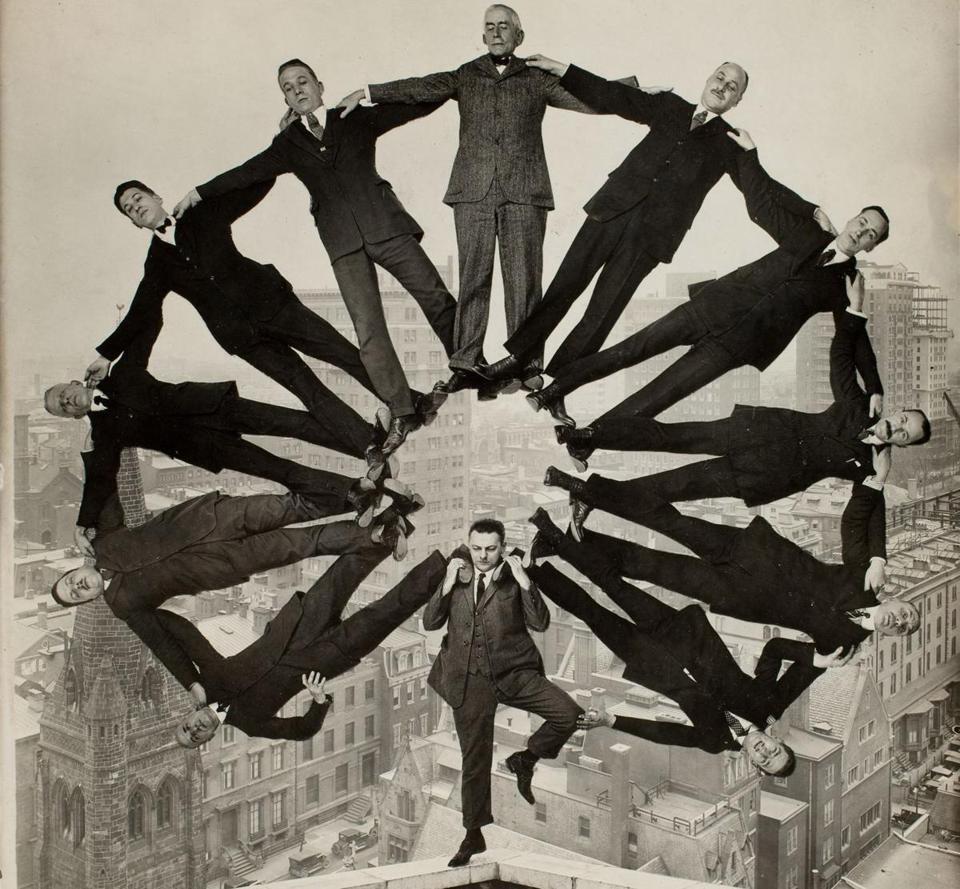
“You can do anything in photography if you can get away with it.” wrote Paul Strand, a photographer who in 1915, painted out a figure that cluttered the composition of “City Hall Park.” That quote appears somewhere in the middle of Dushko Petrovich’s essay on the history of digital photography, and I love it. It speaks to the philosophy that the quality of the image should dictate its form, which even in the context of image manipulation, is its own kind of artistic purity. Petrovich illustrates this by following the quote up with a few choice examples;
One of Ansel Adams’s most iconic images, “Moonrise,” snapped in the late afternoon in 1941, was given its moody contrast via aggressive darkroom chemistry six years after the fact. Even the iconic black borders on Richard Avedon’s trademark full-frame prints—included as a sign the picture hadn’t been altered—were faked with paint if cutting the negative helped the composition.
Petrovich’s article was prompted by “Faking It: Manipulated Photography Before Photoshop”, an exhibition curated by Mia Fineman and currently on view at the Metropolitan Museum of Art, and it makes me think I need to make another trip to the museum. I took a look at the show two weeks ago, but it’s located in a high traffic hallway out front of their photography gallery which makes it difficult to spend time with. Petrovich has me convinced a little extra effort will be worth it.


{ 1 comment }
It depends on why you are using a camera. Is it to record history, events, humanity as it goes on camera or not, journalism, or creating a print, creative art.
Artist are supposed to evoke things of a common essence, the highest common denominator, though you also have the decadence of fashion that is used by the tacky nouveau riche in order to separate themselves from the hoi polloi, and the lowest common denominator, entertainment.
All camera artists, whether f64 types like me and Ansel or those seeking the essence of human activity like Bresson “fake” things, taking out what distracts from emotional connection, from intensity of image while pursuing veritas. Todays contempt nonsense is fashion, and careerism from the now dead age of meism and excess. We are returning to a more spiritual age, where we seek what binds use together as one humanity, or we will fail as a species. “Art” can help or hinder.
As st Paul and some guy named Obama said, “It is time to put aside childish things.”
Time to get to work.
Comments on this entry are closed.