
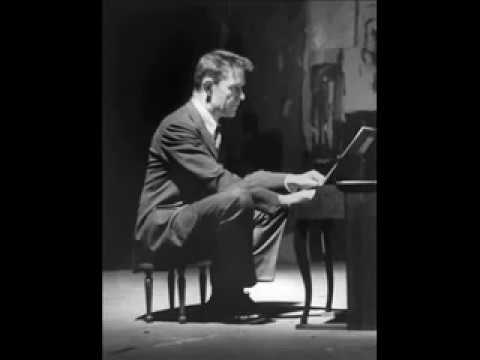
The work, 4”²33”³ (pronounced Four minutes, thirty-three seconds or, as the composer himself referred to it, Four, thirty-three) is a three-movement composition by American avant-garde composer John Cage (19121992). It was composed in 1952 for any instrument (or combination of instruments), and the score instructs the performer not to play the instrument during the entire duration of the piece throughout the three movements (the first being thirty seconds, the second being two minutes and twenty-three seconds, and the third being one minute and forty seconds).
A stream of consciousness response to Adam Lore’s John Cage’s 4”²33″, some of which occurred over email:
Me: Ugh, another piece riffing off John Cage 4’33”. Wait…the audio was removed because it contains third party content? [Listening the sounds of my roommate walk down the stairs and cars splashing through puddles.] This is what the recording industry does to John Cage’s 4’33”. I have shivers.
Alex: oh he faked it? read the comments. still good.
Me: Is it? As a comment on the failure of large companies to think about copyright on a case by case basis it’s not bad, though the work probably didn’t need to be staged to make that point.

In other news, Rob Pruitt’s panda bear paintings have been generating a bit of discussion after a panda bear flash mob flooded Rob Pruitt’s exhibition last week. It turns out the panda bear source for one of his works comes from a pair of designers, Jimiyo and AJ Dimarucot, over at Threadless, the popular purveyors of art on a shirt. Dimarucot, at least, isn’t pleased about it. Members staged a panda bear intervention (imagine Improv Everywhere showing up at Gavin Brown) in response to Pruitt’s failure to credit the original artist.
Knowing the artists and fields is essential to understanding the dispute: Pruitt’s been making panda bear paintings for ten years and freely appropriates found imagery. As Randy Kennedy of The New York Times notes in an email response to Gangnath, a member of the popular t-shirt forum emptees, this strategy has a long history in the art world.
Dear Mr. Gangnath:
I know the painting you're referring to. And yes, Pruitt did tell me it was an appropriation of a T-shirt design. But much of the work in the show is built around the idea of using other people's designs – there are paintings on top of Ikea designs, ones that use recent Lilly Pulitzer designs, others that use well-known T-shirt motifs and classic paintings.
This kind of appropriation or quoting or borrowing or stealing – call it what you will – has been going on as a conscious strategy in the art world for many years now. I've written before about the Marlboro Man paintings of Richard Prince and how they use, without credit, the pictures of those who took the shots for the original ad campaigns. (I did a piece focusing on one of these ad photographers, who was upset that his work was being used.) It's definitely an approach that does not sit well with some, especially those whose work is appropriated.
Thank you for taking the time to write to me about this.
Best,
Randy Kennedy
AJ Dimarucot — who currently lives in the Philippines — apparently hopes to sue, an unsurprising response from an artist using an internet platform that seeks to give emerging designers more exposure. What are his rights in this case? Threadless terms of submission read as follows:
you acknowledge that you assign to skinnyCorp LLC and its subsidiaries and affiliates (hereinafter collectively “Threadless.com”) the entire right, title, and interest in and to the copyright in your Design…for its sole and exclusive use on and in connection with the Items [t-shirts and prints]
In other words, Threadless holds the rights outright to art prints and t-shirts of the panda, but not (by omission) the panda itself. This copyright belongs to the artist. Seeing as how pursuing legal action would fall upon the artist I think the chances of anything coming of this infringement are smaller than they would be otherwise, but you never know.
As for the ethics of the case itself, while I support most forms of art world appropriation, in this case, I think Pruitt could have been a little more sensitive to the source. It’s not like this was some random image he pulled off facebook — it was produced by struggling artists. I probably would take less issue with Pruitt’s titling choices if I had enjoyed the show more. Ultimately the dispute simply highlights the difference in ideology between mass markets like the one Dimarucot seeks to engage, and the art world’s looser stance on the issue.
Meanwhile it seems Jimiyo and Dimarucot’s dude t-shirts have sold out, which may not be a coincidence. Panda Bear girly t-shirts are still available for purchase. Notably, these are far less expensive than Pruitt’s line now available at Opening Ceremony. There you can purchase your very own panda bear fucking doggy-style.


{ 10 comments }
I think Pruitt was a jerk for not finding a way to credit the designers, but I also don’t think he damaged their ability to profit their work. In fact they probably helped. So to me the issue about ethics (in this instance) isn’t that profound. It’s the other considerations that interest me.
People who take a hardline against citation believe it is the work is what matters, and how it came to be is ultimately less important to what it is. Citation only distracts from this, possibly hindering the ability of valuable work from being made. Obssessing over the “Who” instead of the “what” is literally a form of artistic Ad Hominem to this view.
The usual argument against this view is that creators need credit to be able to benefit from their creation enough to motivate further creation. These 2 arguments, however, don’t really address each others’ concerns. You judge which consideration you value more and go with that.
However, you can also argue for citation on the “judge the work alone” basis. Every work created has a rhetoric to it, an idea, even Panda t-shirts. Any time a work appropriates another, there will be an intrinsic relationship between the rhetoric of the previous piece and the new piece. That relationship is often (if not always) as interesting and informative as the individuals themselves.
While it may not be reasonable to credit the intellectual history of everything that led to every artwork ever made, it does make sense to inform one’s viewers of direct references. Give them that context to allow them to observe and engage in the dialogue themselves. That will only lead to greater understanding and a continuance of the dialogue.
The anti-citation crowd ask for us to view these works as objects created from a void, while this argument for citation views everything within the flow (I referred to these stances as “Creationist v. Evolutionist” elsewhere). I tend to fall in the latter camp.
Framing it this way, though, brings up a whole host of other questions, but I thought I’d throw it out there.
I think Pruitt was a jerk for not finding a way to credit the designers, but I also don’t think he damaged their ability to profit their work. In fact they probably helped. So to me the issue about ethics (in this instance) isn’t that profound. It’s the other considerations that interest me.
People who take a hardline against citation believe it is the work is what matters, and how it came to be is ultimately less important to what it is. Citation only distracts from this, possibly hindering the ability of valuable work from being made. Obssessing over the “Who” instead of the “what” is literally a form of artistic Ad Hominem to this view.
The usual argument against this view is that creators need credit to be able to benefit from their creation enough to motivate further creation. These 2 arguments, however, don’t really address each others’ concerns. You judge which consideration you value more and go with that.
However, you can also argue for citation on the “judge the work alone” basis. Every work created has a rhetoric to it, an idea, even Panda t-shirts. Any time a work appropriates another, there will be an intrinsic relationship between the rhetoric of the previous piece and the new piece. That relationship is often (if not always) as interesting and informative as the individuals themselves.
While it may not be reasonable to credit the intellectual history of everything that led to every artwork ever made, it does make sense to inform one’s viewers of direct references. Give them that context to allow them to observe and engage in the dialogue themselves. That will only lead to greater understanding and a continuance of the dialogue.
The anti-citation crowd ask for us to view these works as objects created from a void, while this argument for citation views everything within the flow (I referred to these stances as “Creationist v. Evolutionist” elsewhere). I tend to fall in the latter camp.
Framing it this way, though, brings up a whole host of other questions, but I thought I’d throw it out there.
In this case I think it would have helped to have credited the source, because it would at least diminish the perception of disregard for the creative work of others. But yeah, since the t-shirt may be selling more than it would otherwise it’s less of an issue at least from a lost revenue point of view.
I could see him making an argument that the if piece is somehow about the random noise of our culture, crediting the source artist somehow weakens the piece, but that would be a really arrogant and annoying thing to argue. I agree that he should have credited the artist. In the end, NOT crediting them allowed them to get more attention than they otherwise would have (But would THAT have happened if the NY Times hadn’t run a story with a photo of Pruitt in front of the offending piece?), but that’s not an excuse.
In this case I think it would have helped to have credited the source, because it would at least diminish the perception of disregard for the creative work of others. But yeah, since the t-shirt may be selling more than it would otherwise it’s less of an issue at least from a lost revenue point of view.
I could see him making an argument that the if piece is somehow about the random noise of our culture, crediting the source artist somehow weakens the piece, but that would be a really arrogant and annoying thing to argue. I agree that he should have credited the artist. In the end, NOT crediting them allowed them to get more attention than they otherwise would have (But would THAT have happened if the NY Times hadn’t run a story with a photo of Pruitt in front of the offending piece?), but that’s not an excuse.
First, while the unfamiliarity with the art world’s history of appropriation is probably to be expected, it’s interesting to see that for all the passionately fought arguments in that Emptees thread, there is absolutely no evidence of any actual knowledge of intellectual property law or standard practices.
Second, I think it’s too annoying to be sustainable, but if appropriation [or appropriating without credit, I guess] is only morally acceptable when it happens upward [i.e., when Pruitt rips off Mickey Mouse and Coke, but not when he, a very successful fine artist, reworks an image from lowly t-shirt designers making “$7,500 in three months” from their art], then we should probably look more closely at who’s being ripped off.
Threadless is independent, but it is the 800-lb gorilla of the t-shirt market. AJ and Jimiyo are two prominent designers in that large community. In his dayjob, AJ is actually an art director for OgilvyOne, and he took Jimiyo’s design, flipped it, added some saliva, and submitted it. There was some mild grousing at the time about Threadless [or AJ?] not giving credit to his own source/colabo partner. Obviously, by this point, the Law of the T-shirt Jungle helped settle that issue.
SO it’s arguable that Pruitt’s use is not, in fact, anonymous theft, a quote of a design and from a source that are well-known in its milieu. He did a bunch of t-shirt paintings and actual t-shirts; do we know that t-shirt design was NOT a reason for Pruitt using that image?
And finally, the t-shirt mob’s anger is fueled in part by their misunderstanding of Maccarone’s statement about Rob’s “trademark panda” or whatever. To anyone familiar with his work, that’s obviously a reference to his decade-long use of panda imagery, NOT to any claim that the images in his work are his original property. That nuance is lost in this debate. I’d wager that every single panda Pruitt’s ever painted has been cribbed from somewhere, and that this Universal Panda-ism is central to his interest. And it’s also the cuddly context that makes the Threadless design work in the first place.
First, while the unfamiliarity with the art world’s history of appropriation is probably to be expected, it’s interesting to see that for all the passionately fought arguments in that Emptees thread, there is absolutely no evidence of any actual knowledge of intellectual property law or standard practices.
Second, I think it’s too annoying to be sustainable, but if appropriation [or appropriating without credit, I guess] is only morally acceptable when it happens upward [i.e., when Pruitt rips off Mickey Mouse and Coke, but not when he, a very successful fine artist, reworks an image from lowly t-shirt designers making “$7,500 in three months” from their art], then we should probably look more closely at who’s being ripped off.
Threadless is independent, but it is the 800-lb gorilla of the t-shirt market. AJ and Jimiyo are two prominent designers in that large community. In his dayjob, AJ is actually an art director for OgilvyOne, and he took Jimiyo’s design, flipped it, added some saliva, and submitted it. There was some mild grousing at the time about Threadless [or AJ?] not giving credit to his own source/colabo partner. Obviously, by this point, the Law of the T-shirt Jungle helped settle that issue.
SO it’s arguable that Pruitt’s use is not, in fact, anonymous theft, a quote of a design and from a source that are well-known in its milieu. He did a bunch of t-shirt paintings and actual t-shirts; do we know that t-shirt design was NOT a reason for Pruitt using that image?
And finally, the t-shirt mob’s anger is fueled in part by their misunderstanding of Maccarone’s statement about Rob’s “trademark panda” or whatever. To anyone familiar with his work, that’s obviously a reference to his decade-long use of panda imagery, NOT to any claim that the images in his work are his original property. That nuance is lost in this debate. I’d wager that every single panda Pruitt’s ever painted has been cribbed from somewhere, and that this Universal Panda-ism is central to his interest. And it’s also the cuddly context that makes the Threadless design work in the first place.
Appropriation without credit tends to be a little more morally acceptable when it moves upward not just because of class norms, but for the recognizability of those images. Pruitt could name his painting Walt Disney/Deitch/Pruitt, but the necessity of calling attention to the source is lessened by the fact that it’s already part of the cultural vocabulary. I would guess though, the impulse to title works in such a way that directly references more recognizable sources actually goes up with their own recognizability. People naturally identify with products all the time as a means of constructing identity, so naming the more recognizable ones would be a natural tendency.
As for the actual t-shirts and the t-shirt canvases, I think the t-shirt source would be a good reason not to put the iconography on his own. Given the aesthetics of Pruitt’s own line of shirt though, I’m guessing the thought never crossed his mind, as the image would make no sense in the context of this series.
Appropriation without credit tends to be a little more morally acceptable when it moves upward not just because of class norms, but for the recognizability of those images. Pruitt could name his painting Walt Disney/Deitch/Pruitt, but the necessity of calling attention to the source is lessened by the fact that it’s already part of the cultural vocabulary. I would guess though, the impulse to title works in such a way that directly references more recognizable sources actually goes up with their own recognizability. People naturally identify with products all the time as a means of constructing identity, so naming the more recognizable ones would be a natural tendency.
As for the actual t-shirts and the t-shirt canvases, I think the t-shirt source would be a good reason not to put the iconography on his own. Given the aesthetics of Pruitt’s own line of shirt though, I’m guessing the thought never crossed his mind, as the image would make no sense in the context of this series.
Comments on this entry are closed.
{ 2 trackbacks }