
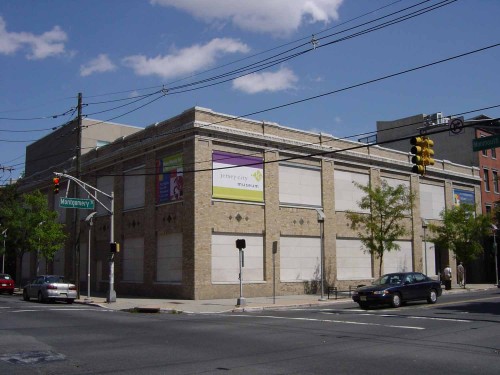
Jersey City Museum
Jersey City’s only museum showcasing the work of local emerging artists is in dire financial straits. Artists such as Martha Colburn, Amy Wilson, Louis Cameron, Damien Catera have all exhibited at the Jersey City Museum, a public institution with a now uncertain future. On March 30th the museum announced it would slash its hours to only one day a week (Saturday 12-5) to reduce operating costs. That’s not a good sign.
A worse sign is that only a week and a half after that announcement was made someone mailed me a letter from the museum staff directed to the museum’s Board of Trustees, expressing a lack of confidence in the museum’s future. From the document:
As per our last staff meeting with Nathan Sambul on March 3rd, we were told of a 90-day plan to save the museum. Less than two weeks later, we have not been paid for this past pay period and have growing concerns about the future. In spite of this, the JCM staff remains fully dedicated. We deserve to know if the 90-day plan is still in affect and, if so, under what conditions we are expected to serve.
We the staff of Jersey City Museum are concerned about the museum’s well-being and financial situation for the following reasons:
- Jersey City Museum has not made payroll in a timely manner seven times in the last nine months: July 2, Sept. 30, Oct. 9, Dec. 8, Feb. 12, Feb. 25, March 15.
- As of today, March 17th, Jersey City Museum employees have not been paid for the March 15th pay period.
- Jersey City Museum issued bad checks to its employees three of the last five times. Employees were penalized by their banks and employees’ personal credit has been affected.
- Jersey City Museum is using revenue generated from program partnerships to supplement payroll.
- Jersey City Museum has encouraged its part-time staff to work unpaid, “to volunteer services,” in order to oversee and manage its programming.
- Jersey City Museum has encouraged its salaried staff to forgo compensation days to manage and oversee programming.
- Jersey City Museum has not secured new funds since April 2009, and we are concerned that no new funds are on the horizon.
Yikes! This is pretty serious business, so I called everyone I knew at the museum and wrote virtually every staff member who’d ever worked there for statements. Strangely almost no one wanted to talk. The few who would either gave me canned PR responses or would speak only under the condition of anonymity. I also talked to a number of trustee members including the chairman of the board, Nathan Sambul, about whether they had received the letter. No one could confirm its receipt. In response to my questions about the museum’s financial health, Sambul simply said:
The Jersey City Museum, like many other nonprofit institutions, has seen a decrease in its funding, and we have taken appropriate action. On our website, we have clearly laid out our course of action. If you like to report on the Museum, I would hope that you would recommend to your readers to come to the museum and see our fabulous shows.
Although no link was provided, the page Sambul refers to discusses the Museum’s reduced operating hours and a June fundraiser titled ARTrageous. The event asks donors to give between $5 to $5,000, using an artist-designed golf course with the holes as donation markers. This isn’t exactly a plan, though meeting the event’s $90,000 target won’t hurt the museum. When I asked Sambul to confirm that there was no 90-day initiative to save the museum, he refused to comment.
According to many sources, the question of why the museum’s suffering such hard times begins with long time Executive Director Marion Grzesiak and ends with her ineffective replacement Laurene Buckley, who was relieved of the position after just six months.
Grzesiak worked at the museum between 2001 and 2008, and is now at the Visual Arts Center of New Jersey. Nearly everyone I spoke to who had worked at the museum during this time complained about “rampant nepotism”, one anonymous source decried, “the museum was run like a family business–and most of the staff were not a part of the family or the business.” Said source was speaking specifically of Grzesiak’s hire of her son, James Congregane who was brought on as the front desk manager and soon promoted to Director of Operations. Rocio Aranda-Alvarado, a respected curator at the museum would later marry Congregane, placing three top positions at the museum in one family.
I was told all three received raises in the face of the 2008 cutbacks and over $250,000 in loans but 990 forms for 2005-2008 only list the loan and highest paid positions. Aranda-Alvarado received a nominal raise for that year, totaling $3,158. According to these same records, from 2001-2004 Grzesiak’s pay remained at 90,000, but over the course of the next four years was increased by $32, 263 in salary and benefits. This doesn’t strike me as wholly out of line — Grzesiak’s salary is still well below any museum executives name recently in the New York Times “Major Earners” — though any pay increase in a year of cutbacks and bank loans doesn’t look good. In 2008, Grzesiak received a raise of over $7,500. I was unable to reach her for comment.
Grzesiak’s departure was unfortunate timing for the museum, as it is now burdened with over $250,000 dollars in loans and no experienced fundraiser to pull them out of those straits. It’s unclear why the Board of Trustees appointed Laurene Buckley as her replacement, as I was told she had few contacts in Jersey City and a resume that included being fired from The Queens Museum of Art – according to some – for failing to adequately increase attendance. It was under her leadership, that the Director of Development position was eliminated in January 2010, for a part time grant writer. You know a museum’s in trouble when they lay off the people who ensure the place has enough money to operate. Buckley was let go only three months later according to sources, for failing to raise any money for the museum during the course of her six-month employment.
Buckley also did not return my emails, though one former staff member who spoke on the condition of anonymity said the museum’s troubles were not the result of one person but a perfect storm of events: losing a long time director, weathering the financial crash, and a myriad of other unspecified problems. “Any not- for-profit who has a successful director for many years, when the director steps down– they fall apart,” the source told me.
Of course, with almost no staff, and no development plan past a $90,000 fundraising campaign it’s hard to know how this is going to happen. The museum hasn’t had a full time curator since Aranda-Alvarado’s departure in 2009, nor, according to sources, an exhibition budget. Not to state the obvious, but that’s a problem. So are the tales of mysteriously disappearing funds and failure to meet payroll that ran though my correspondence with former staff. As of today the Jersey City Museum has not released all employee pay-checks from March.
Still, almost every staff member I talked to spoke with deep commitment to the museum even in the face of murky financial management. “I am saddened by the thought that the museum might be in trouble and I hope something can be done to save this important community institution,” former employee Sandy Martiny told me over email, later acknowledging her statement was canned. “It’s actually how I feel about JMC. Call me Pollyanna.” Another spoke with great remorse about the museum’s strong education program. At one time the museum provided tours and workshops based on the museum’s permanent and temporary exhibitions, exposing students to artists such as Xenobia Bailey; Papo Colo; Raphael Ortiz; Chakaia Booker; Ben Jones; William Pope L; Melvin Edwards; Rodriguez Calero. The permanent collection reflects the demographic of Jersey City. Closure would be a huge loss to the public.
Reflecting the dedication I witnessed when speaking to JMC employees, the apparently unsent letter to the board makes these suggestions for moving forward:
We feel employees should be able to confidentially contribute our input to the Board. In addition, here are some of the staff’s suggestions that may help us remain open.
- Jersey City Museum could move to the Beacon location.
- Sell the museum’s third floor to an independent contractor and staff offices can be relocated to the first and second floor.
- Gala committee should expand outside of museum staff to help with fundraising efforts.
- Sell off naming rights for the museum’s galleries.
- Sell off naming rights for seats in the Caroline Guarini Theatre.
- Hire a professional fundraiser who will take a small cut. At this time, there is no one on staff fundraising for the museum.
The JCM staff’s position is that we are not giving up. We do not believe that this situation is the result of one person’s actions. We maintain that this problem is fixable with the right steps and appropriate leadership.
One month later, it’s unclear whether any of these steps have been explored let alone taken.
Anne Johnson contributed reporting to this piece.


{ 34 comments }
The museum is open only five hours a week now: Saturday, noon to 5:00.
It’s not the first time a new building killed a museum. The Jersey City Museum would have been much better off in a funky old space that’s cheap, accessible, and more likely to be used in a vital way.
Last week I posted some suggestions for the museum: http://leftbankartblog.blogspot.com/2010/04/what-will-become-of-jersey-city-museum.html
The museum is open only five hours a week now: Saturday, noon to 5:00.
It’s not the first time a new building killed a museum. The Jersey City Museum would have been much better off in a funky old space that’s cheap, accessible, and more likely to be used in a vital way.
Last week I posted some suggestions for the museum: http://leftbankartblog.blogspot.com/2010/04/what-will-become-of-jersey-city-museum.html
Paddy, you’ve done a phenomenal job following up on a story that hasn’t really seen the light of day–largely because the museum has been steadfastly refusing to issue anything other than canned statements. What’s really been going on is a mystery, but it’s terrifying to think the museum could go under without anyone saying a word.
Paddy, you’ve done a phenomenal job following up on a story that hasn’t really seen the light of day–largely because the museum has been steadfastly refusing to issue anything other than canned statements. What’s really been going on is a mystery, but it’s terrifying to think the museum could go under without anyone saying a word.
Paddy, you’ve done a phenomenal job following up on a story that hasn’t really seen the light of day–largely because the museum has been steadfastly refusing to issue anything other than canned statements. What’s really been going on is a mystery, but it’s terrifying to think the museum could go under without anyone saying a word.
It is extremely upsetting to hear of the museum’s precarious situation. One can only hope that public awareness of this situation can bring about the necessary support to keep the doors open. Clearly, such money would be nothing more than a short term fix unless ongoing fundraising is undertaken on behalf of the museum by an experienced individual.
It is extremely upsetting to hear of the museum’s precarious situation. One can only hope that public awareness of this situation can bring about the necessary support to keep the doors open. Clearly, such money would be nothing more than a short term fix unless ongoing fundraising is undertaken on behalf of the museum by an experienced individual.
It is extremely upsetting to hear of the museum’s precarious situation. One can only hope that public awareness of this situation can bring about the necessary support to keep the doors open. Clearly, such money would be nothing more than a short term fix unless ongoing fundraising is undertaken on behalf of the museum by an experienced individual.
It is extremely upsetting to hear of the museum’s precarious situation. One can only hope that public awareness of this situation can bring about the necessary support to keep the doors open. Clearly, such money would be nothing more than a short term fix unless ongoing fundraising is undertaken on behalf of the museum by an experienced individual.
@Irene. I just tweeted those sentiments.
@Irene. I just tweeted those sentiments.
@Irene. I just tweeted those sentiments.
@Irene. I just tweeted those sentiments.
Um, I might just know of an inexpensive massive space the size of Dia Beacon that could be available in a much prettier city called Paterson.
(Hint– there are trees, and the nation’s second largest waterfall next to Niagara in terms of water volume as added bonus; and brand spanking new NJ Transit trains instead of the dingy and smelly PATH.)
Oly 🙂
Um, I might just know of an inexpensive massive space the size of Dia Beacon that could be available in a much prettier city called Paterson.
(Hint– there are trees, and the nation’s second largest waterfall next to Niagara in terms of water volume as added bonus; and brand spanking new NJ Transit trains instead of the dingy and smelly PATH.)
Oly 🙂
Re: Oly’s comment–you make it sound as though NJ has room for only one art center. Paterson deserves its own permanent art spaces, as does Jersey City. The two places are entirely different and JCM has evolved alongside the city it calls home.
Unfortunately, the museum’s financial situation is hindering its mission but when these things happen it’s usually not the institution, but rather the individuals involved in the decision making process. Hopefully this report will do some good and motivate concerned art lovers to help a small museum with a big mission.
Re: Oly’s comment–you make it sound as though NJ has room for only one art center. Paterson deserves its own permanent art spaces, as does Jersey City. The two places are entirely different and JCM has evolved alongside the city it calls home.
Unfortunately, the museum’s financial situation is hindering its mission but when these things happen it’s usually not the institution, but rather the individuals involved in the decision making process. Hopefully this report will do some good and motivate concerned art lovers to help a small museum with a big mission.
Re: Oly’s comment–you make it sound as though NJ has room for only one art center. Paterson deserves its own permanent art spaces, as does Jersey City. The two places are entirely different and JCM has evolved alongside the city it calls home.
Unfortunately, the museum’s financial situation is hindering its mission but when these things happen it’s usually not the institution, but rather the individuals involved in the decision making process. Hopefully this report will do some good and motivate concerned art lovers to help a small museum with a big mission.
Re: Oly’s comment–you make it sound as though NJ has room for only one art center. Paterson deserves its own permanent art spaces, as does Jersey City. The two places are entirely different and JCM has evolved alongside the city it calls home.
Unfortunately, the museum’s financial situation is hindering its mission but when these things happen it’s usually not the institution, but rather the individuals involved in the decision making process. Hopefully this report will do some good and motivate concerned art lovers to help a small museum with a big mission.
To all the anonymous commentors waiting to have their comments approved: Unless you submit your full name, your comments will not be approved. You can still post with a handle, but I need to know who you are.
Thank you.
To all the anonymous commentors waiting to have their comments approved: Unless you submit your full name, your comments will not be approved. You can still post with a handle, but I need to know who you are.
Thank you.
To all the anonymous commentors waiting to have their comments approved: Unless you submit your full name, your comments will not be approved. You can still post with a handle, but I need to know who you are.
Thank you.
D didn’t realize that in order for my comment to be posted, I needed to put my name on it. I am a former employee whom worked there for the last six years and you haven’t tried to get in touch with me.
After reading this article, I couldn’t help but be upset. To me, it slanders Marion Grzesiak’s name and reputation. During my time working under her (6 Years), I had nothing but great admiration for her. I’ve watched her over the years and saw firsthand the dedication that she gave to the museum. There is nothing that I wouldn’t have done for Marion and I’m quite sure that you will find other employees who have the same feelings, if you bother to look. When it comes to leaders, she is one of the best. It’s easy to point the finger at one person when things are going badly but she was the class of the museum. The museum was able to survive because of the donors that were brought in, thanks to her tenacity, style, and grace. The museum flourished under Marion Grzesiak’s leadership.
Even without any definitive timetable about the final two weeks pay, a large majority of the staff continued to work up until the end, the same loyal staff that Marion Grzesiak had put together. Unlike other institutions where the director doesn’t even know the names of her staff, Marion made everyone who worked at JCM feel appreciated and she acknowledged that whenever possible.
The opening paragraph of the referenced letter is full of errors, which is one of the reasons it was never sent. While there weren’t any direct deposits being made, employees were still being paid. Only on one occasion was payroll late by a day.
Finally, the source of your information, is a disgruntled PART-TIME employee, Brendan Carroll, who continues harbor ill feelings over the fact that he hasn’t received his final paycheck. Despite your claim to having spoken to former staff members, 9 out of 13 former employees that were there during the final year have never been interviewed or even contacted by you for your “research†for this mis-informed blog! The letter you received that was written by the employees was never sent, so Brendan is clearly looking to attack the museum and its reputation maliciously, and for what a $400 paycheck? One has to wonder about your fact checking if you are basing your blog on the words of one or two disgruntled employees. Brendan Carroll is not the only one that has not been paid. We are all still waiting for the final check, but we have faith in our Board of Trustees that it will come soon.
D didn’t realize that in order for my comment to be posted, I needed to put my name on it. I am a former employee whom worked there for the last six years and you haven’t tried to get in touch with me.
After reading this article, I couldn’t help but be upset. To me, it slanders Marion Grzesiak’s name and reputation. During my time working under her (6 Years), I had nothing but great admiration for her. I’ve watched her over the years and saw firsthand the dedication that she gave to the museum. There is nothing that I wouldn’t have done for Marion and I’m quite sure that you will find other employees who have the same feelings, if you bother to look. When it comes to leaders, she is one of the best. It’s easy to point the finger at one person when things are going badly but she was the class of the museum. The museum was able to survive because of the donors that were brought in, thanks to her tenacity, style, and grace. The museum flourished under Marion Grzesiak’s leadership.
Even without any definitive timetable about the final two weeks pay, a large majority of the staff continued to work up until the end, the same loyal staff that Marion Grzesiak had put together. Unlike other institutions where the director doesn’t even know the names of her staff, Marion made everyone who worked at JCM feel appreciated and she acknowledged that whenever possible.
The opening paragraph of the referenced letter is full of errors, which is one of the reasons it was never sent. While there weren’t any direct deposits being made, employees were still being paid. Only on one occasion was payroll late by a day.
Finally, the source of your information, is a disgruntled PART-TIME employee, Brendan Carroll, who continues harbor ill feelings over the fact that he hasn’t received his final paycheck. Despite your claim to having spoken to former staff members, 9 out of 13 former employees that were there during the final year have never been interviewed or even contacted by you for your “research†for this mis-informed blog! The letter you received that was written by the employees was never sent, so Brendan is clearly looking to attack the museum and its reputation maliciously, and for what a $400 paycheck? One has to wonder about your fact checking if you are basing your blog on the words of one or two disgruntled employees. Brendan Carroll is not the only one that has not been paid. We are all still waiting for the final check, but we have faith in our Board of Trustees that it will come soon.
D didn’t realize that in order for my comment to be posted, I needed to put my name on it. I am a former employee whom worked there for the last six years and you haven’t tried to get in touch with me.
After reading this article, I couldn’t help but be upset. To me, it slanders Marion Grzesiak’s name and reputation. During my time working under her (6 Years), I had nothing but great admiration for her. I’ve watched her over the years and saw firsthand the dedication that she gave to the museum. There is nothing that I wouldn’t have done for Marion and I’m quite sure that you will find other employees who have the same feelings, if you bother to look. When it comes to leaders, she is one of the best. It’s easy to point the finger at one person when things are going badly but she was the class of the museum. The museum was able to survive because of the donors that were brought in, thanks to her tenacity, style, and grace. The museum flourished under Marion Grzesiak’s leadership.
Even without any definitive timetable about the final two weeks pay, a large majority of the staff continued to work up until the end, the same loyal staff that Marion Grzesiak had put together. Unlike other institutions where the director doesn’t even know the names of her staff, Marion made everyone who worked at JCM feel appreciated and she acknowledged that whenever possible.
The opening paragraph of the referenced letter is full of errors, which is one of the reasons it was never sent. While there weren’t any direct deposits being made, employees were still being paid. Only on one occasion was payroll late by a day.
Finally, the source of your information, is a disgruntled PART-TIME employee, Brendan Carroll, who continues harbor ill feelings over the fact that he hasn’t received his final paycheck. Despite your claim to having spoken to former staff members, 9 out of 13 former employees that were there during the final year have never been interviewed or even contacted by you for your “research†for this mis-informed blog! The letter you received that was written by the employees was never sent, so Brendan is clearly looking to attack the museum and its reputation maliciously, and for what a $400 paycheck? One has to wonder about your fact checking if you are basing your blog on the words of one or two disgruntled employees. Brendan Carroll is not the only one that has not been paid. We are all still waiting for the final check, but we have faith in our Board of Trustees that it will come soon.
D didn’t realize that in order for my comment to be posted, I needed to put my name on it. I am a former employee whom worked there for the last six years and you haven’t tried to get in touch with me.
After reading this article, I couldn’t help but be upset. To me, it slanders Marion Grzesiak’s name and reputation. During my time working under her (6 Years), I had nothing but great admiration for her. I’ve watched her over the years and saw firsthand the dedication that she gave to the museum. There is nothing that I wouldn’t have done for Marion and I’m quite sure that you will find other employees who have the same feelings, if you bother to look. When it comes to leaders, she is one of the best. It’s easy to point the finger at one person when things are going badly but she was the class of the museum. The museum was able to survive because of the donors that were brought in, thanks to her tenacity, style, and grace. The museum flourished under Marion Grzesiak’s leadership.
Even without any definitive timetable about the final two weeks pay, a large majority of the staff continued to work up until the end, the same loyal staff that Marion Grzesiak had put together. Unlike other institutions where the director doesn’t even know the names of her staff, Marion made everyone who worked at JCM feel appreciated and she acknowledged that whenever possible.
The opening paragraph of the referenced letter is full of errors, which is one of the reasons it was never sent. While there weren’t any direct deposits being made, employees were still being paid. Only on one occasion was payroll late by a day.
Finally, the source of your information, is a disgruntled PART-TIME employee, Brendan Carroll, who continues harbor ill feelings over the fact that he hasn’t received his final paycheck. Despite your claim to having spoken to former staff members, 9 out of 13 former employees that were there during the final year have never been interviewed or even contacted by you for your “research†for this mis-informed blog! The letter you received that was written by the employees was never sent, so Brendan is clearly looking to attack the museum and its reputation maliciously, and for what a $400 paycheck? One has to wonder about your fact checking if you are basing your blog on the words of one or two disgruntled employees. Brendan Carroll is not the only one that has not been paid. We are all still waiting for the final check, but we have faith in our Board of Trustees that it will come soon.
Hi Darren
Thanks for contributing your point of view. Please note that I both point out that Grzesiak’s salary increase was not, in my opinion out of line, nor do I make comment specific comment about the nepotism charges. In my opinion though, three family members in top position *looks* bad even if the family members are all doing an amazing job. Within this post another source describes Grzesiak as “Successful”, so different points of view are offered.
I would also like to point out that I contacted as many people as I could from the museum, countless more than you’ve noted from previous years. Almost no one responded, though far more than two you seem to suggest. I do wish however, that I had your email, because you’ve been very candid with your opinions, and offer more depth to the story.
As for my source, I received a letter in the mail signed “anonymous tipster”, so I do not know who the source of that letter is. This comment only barely made approval because it speculates on the names of sources and their motivations. I don’t think this is a positive direction and further comments in this vein will not be approved.
Finally, I would like to point out that this comment does not address the primary issue of the post, which is a) the museum is in danger of closing, and b) there appears to be no staff to save it. As a once full time staff member perhaps you can address what the museum’s plans are going forward?
Hi Darren
Thanks for contributing your point of view. Please note that I both point out that Grzesiak’s salary increase was not, in my opinion out of line, nor do I make comment specific comment about the nepotism charges. In my opinion though, three family members in top position *looks* bad even if the family members are all doing an amazing job. Within this post another source describes Grzesiak as “Successful”, so different points of view are offered.
I would also like to point out that I contacted as many people as I could from the museum, countless more than you’ve noted from previous years. Almost no one responded, though far more than two you seem to suggest. I do wish however, that I had your email, because you’ve been very candid with your opinions, and offer more depth to the story.
As for my source, I received a letter in the mail signed “anonymous tipster”, so I do not know who the source of that letter is. This comment only barely made approval because it speculates on the names of sources and their motivations. I don’t think this is a positive direction and further comments in this vein will not be approved.
Finally, I would like to point out that this comment does not address the primary issue of the post, which is a) the museum is in danger of closing, and b) there appears to be no staff to save it. As a once full time staff member perhaps you can address what the museum’s plans are going forward?
Hi Darren
Thanks for contributing your point of view. Please note that I both point out that Grzesiak’s salary increase was not, in my opinion out of line, nor do I make comment specific comment about the nepotism charges. In my opinion though, three family members in top position *looks* bad even if the family members are all doing an amazing job. Within this post another source describes Grzesiak as “Successful”, so different points of view are offered.
I would also like to point out that I contacted as many people as I could from the museum, countless more than you’ve noted from previous years. Almost no one responded, though far more than two you seem to suggest. I do wish however, that I had your email, because you’ve been very candid with your opinions, and offer more depth to the story.
As for my source, I received a letter in the mail signed “anonymous tipster”, so I do not know who the source of that letter is. This comment only barely made approval because it speculates on the names of sources and their motivations. I don’t think this is a positive direction and further comments in this vein will not be approved.
Finally, I would like to point out that this comment does not address the primary issue of the post, which is a) the museum is in danger of closing, and b) there appears to be no staff to save it. As a once full time staff member perhaps you can address what the museum’s plans are going forward?
Hi Darren
Thanks for contributing your point of view. Please note that I both point out that Grzesiak’s salary increase was not, in my opinion out of line, nor do I make comment specific comment about the nepotism charges. In my opinion though, three family members in top position *looks* bad even if the family members are all doing an amazing job. Within this post another source describes Grzesiak as “Successful”, so different points of view are offered.
I would also like to point out that I contacted as many people as I could from the museum, countless more than you’ve noted from previous years. Almost no one responded, though far more than two you seem to suggest. I do wish however, that I had your email, because you’ve been very candid with your opinions, and offer more depth to the story.
As for my source, I received a letter in the mail signed “anonymous tipster”, so I do not know who the source of that letter is. This comment only barely made approval because it speculates on the names of sources and their motivations. I don’t think this is a positive direction and further comments in this vein will not be approved.
Finally, I would like to point out that this comment does not address the primary issue of the post, which is a) the museum is in danger of closing, and b) there appears to be no staff to save it. As a once full time staff member perhaps you can address what the museum’s plans are going forward?
Thank you so much for writing this article. I think it’s very even-handed and fair, and I appreciate you giving it the attention that you have.
It doesn’t bode well that I’ve been a long-time resident (both my studio and my home for 14+ years) of Jersey City, I’ve shown in the museum several times, and this is the first that I’m hearing about this situation. I knew that the museum was having “trouble,” but so are every other non-profit gallery/museum I can think of, and also many for-profit ones. I had no idea things were so dire.
There is a very rich and very serious artistic community here in Jersey City, and I’m sure we’d all be happy to help the museum out any way we can. There have been fundraisers and galas before, although not in a very long time. I don’t see why there couldn’t be more. And I would think that many of the artists here would be thrilled at the opportunity to help come up with a long-term solution for the museum to insure that this situation doesn’t just repeat itself in a few years. Now would seem to be a perfect time to get creative and start opening things up to different opinions and new ways of trying things.
I really think that if the museum just reached out to us, they would be very happy with the result they get back, and that they would find many people here willing to be generous with their time and their work. I understand that they are lacking a serious core of employees at this point, but if the Board of Trustees still exists, surely there’s someone there who can get access to a mailing list to put out a call. (Yes, you can start with me, if you want.)
As for Oly – be nice! NJ Transit is not without its charms, but the PATH trains run 24/7 and cost less than a subway ride. And they’re rolling out a new fleet that’s shiny and blue. A cultural center in Paterson is a great idea, but so is the JC Museum.
Thank you so much for writing this article. I think it’s very even-handed and fair, and I appreciate you giving it the attention that you have.
It doesn’t bode well that I’ve been a long-time resident (both my studio and my home for 14+ years) of Jersey City, I’ve shown in the museum several times, and this is the first that I’m hearing about this situation. I knew that the museum was having “trouble,” but so are every other non-profit gallery/museum I can think of, and also many for-profit ones. I had no idea things were so dire.
There is a very rich and very serious artistic community here in Jersey City, and I’m sure we’d all be happy to help the museum out any way we can. There have been fundraisers and galas before, although not in a very long time. I don’t see why there couldn’t be more. And I would think that many of the artists here would be thrilled at the opportunity to help come up with a long-term solution for the museum to insure that this situation doesn’t just repeat itself in a few years. Now would seem to be a perfect time to get creative and start opening things up to different opinions and new ways of trying things.
I really think that if the museum just reached out to us, they would be very happy with the result they get back, and that they would find many people here willing to be generous with their time and their work. I understand that they are lacking a serious core of employees at this point, but if the Board of Trustees still exists, surely there’s someone there who can get access to a mailing list to put out a call. (Yes, you can start with me, if you want.)
As for Oly – be nice! NJ Transit is not without its charms, but the PATH trains run 24/7 and cost less than a subway ride. And they’re rolling out a new fleet that’s shiny and blue. A cultural center in Paterson is a great idea, but so is the JC Museum.
Thank you so much for writing this article. I think it’s very even-handed and fair, and I appreciate you giving it the attention that you have.
It doesn’t bode well that I’ve been a long-time resident (both my studio and my home for 14+ years) of Jersey City, I’ve shown in the museum several times, and this is the first that I’m hearing about this situation. I knew that the museum was having “trouble,” but so are every other non-profit gallery/museum I can think of, and also many for-profit ones. I had no idea things were so dire.
There is a very rich and very serious artistic community here in Jersey City, and I’m sure we’d all be happy to help the museum out any way we can. There have been fundraisers and galas before, although not in a very long time. I don’t see why there couldn’t be more. And I would think that many of the artists here would be thrilled at the opportunity to help come up with a long-term solution for the museum to insure that this situation doesn’t just repeat itself in a few years. Now would seem to be a perfect time to get creative and start opening things up to different opinions and new ways of trying things.
I really think that if the museum just reached out to us, they would be very happy with the result they get back, and that they would find many people here willing to be generous with their time and their work. I understand that they are lacking a serious core of employees at this point, but if the Board of Trustees still exists, surely there’s someone there who can get access to a mailing list to put out a call. (Yes, you can start with me, if you want.)
As for Oly – be nice! NJ Transit is not without its charms, but the PATH trains run 24/7 and cost less than a subway ride. And they’re rolling out a new fleet that’s shiny and blue. A cultural center in Paterson is a great idea, but so is the JC Museum.
Can’t say I’m surprised the place has operated with some questionable practices with regard to nepotism and general poor management.
Comments on this entry are closed.
{ 1 trackback }