
POST BY PADDY JOHNSON
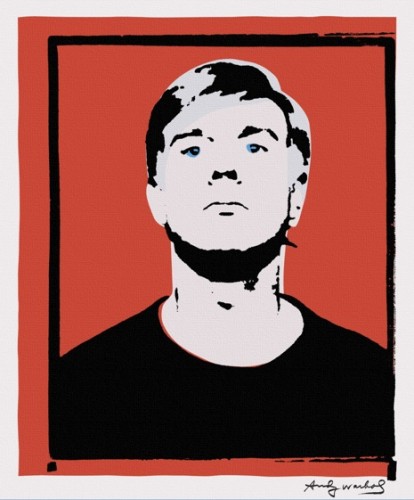
Andy Warhol, Red Self Portrait, 1965
The great un-kept secret of the art world dating back to the mid nineties was that dealers could purchase authenticated work from the Andy Warhol Foundation at low prices and resell it to collectors with a considerable mark-up. The Foundation’s prices have since gone up, the stock diminished, and debates over whether the foundation and authentication board are acting in the interest of accuracy or their stake in the market are now being asked. At least this is the case with collector Susan Shaer’s Red Self Portrait, a work denied by the foundation for reasons many claim are to designed to drive up the price of Warhol work. I don’t know enough about the Warhol market to understand why Red Self Portrait is worth more to the pre-existing market unauthenticated, but I assume it has to do with the fact that collectors prefer the touch of the artist’s hand, and in this case, Warhol gave instructions to printer. The problem, according to many experts, is that this practice is what makes the piece important. Warhol pioneered the practice out sourcing art work to skilled laborers, and this work is on the cover of his Catalogue Raisonne at his request. Felix Salmon does a good job writing summing a few aspects of the authenticity debate brought to light once more by Richard Dorment’s book review What is An Andy Warhol but the real jewel comes in Rainer Crone’s 1200 word response in the comment section. Crone is the author of Warhol’s Catalogue Raisonne and worked closely with the artist from 1968 until his death in 1987.
In January 1970, before the publication of my catalogue raisonné, Warhol and I met in his Factory on Union Square to discuss which image should be used for the cover of the raisonné of his work. To demonstrate his unique reproduction technique using silk screens, Warhol showed me two paintings, identical in color and outline, of the same image, from the series Red Self Portrait. He suggested that we use one of these two paintings for the cover to illustrate his repetitive and multiple reproductions of the same image—in this case, his self-portrait. We chose the Red Self Portrait, which had been recently acquired by Warhol's Swiss dealer and Interview magazine co-owner Bruno Bischofberger and signed and dedicated to “Bruno B.” My 1970 catalog, as well as the revised editions of 1972 (Milan: Mazotta Editore), which included an additional 406 works approved by Warhol, and 1976 (Berlin: Wasmuth), listed this Red Self Portrait as entry #169, but the work was omitted from the Zurich-based gallery Ammann's 2004 catalogue raisonné (without any notification or query to me)—as if this painting never existed or had been destroyed.
This painting was a perfect example of Warhol's technique of making multiple silk screens of the same image (for different colors, etc.) and was produced using the more “hands off” approach he continued with in the 1970s and 1980s. Since he often conveyed the artistic design by telephoning details to the silk screen factory, it is appropriate to compare this approach to the historically first “art by telephone” technique, developed in 1922 by the eminent Bauhaus artist Laszlo Moholy-Nagy, with whom Warhol was familiar through his studies at Carnegie Tech. (See my book The Pictorial Oeuvre of Andy Warhol, a revised catalogue raisonné with about 350 additional entries, that served in 1974 as my Ph.D. thesis and was published by Wasmuth in 1976.)
The artist had chosen at that time the unique and more modern production technique of silk screen over the traditional hand-painted ones; this new technique was a result of Warhol's new concept of art-making and his rejection of the centuries-old theory of the artist as auteur, the unique artistic originator.
how aware the artist was of the theoretical as well as philosophical implications of his mechanical technique of art-making, using silk screening and other simple reproduction processes (rubber stamp, “blotted line”), became evident in the single published interview Warhol gave that, so far as I know, deserves to be classified as accurate:
“”¦No one would know whether my picture was mine or somebody else's.”
“It would turn art history upside down?”
“Yes.”[1]This concept, arrived at by Warhol in 1962—following progressive experimentation in his commercial art work of the early 1950s with rubber stamp and mono print techniques—can be declared as one of Warhol's most significant and important contributions to Western art. Intentional and purposefully conceived, it involves a progressive sequence of mechanical image creations: from hand painting to mono prints, lino cuts, rubber stamps, stencils, single and multiple silk screens in the years 1963-1964.
To read the whole response click here.
I should note that the authenticity is simply one side of the debate. A judge ruled last May that while Susan Shaer could pursue claims of fraud and unjust enrichment against a foundation that authenticates the artist's paintings and prints, her antitrust claims would not proceed to court.
UPDATE: Via: Greg.org in the comment section:
Tip of the iceberg. Crone's awesome letter was written to the NYRB and was published along with an extraordinary series of threats, non-replies, and rebuttals between Warhol Foundation chairman Joel Wachs, Dorment, and many other interested parties, including owners of another Warhol self-portrait from the series. That family rejected the authentication board's invitation to submit the painting when they found out the plan was to de-authenticate it, and they have filed another anti-trust suit.
As this unfolds, it should get seriously ugly, but in the mean time, the letters and accusations are pretty riveting. And the Warhol operation's actions are increasingly looking vastly criminal.
Start with the latest, the link to Crone's letter, and then just surf around through the various replies. it's mind-blowing.
Up next: Powhida!


{ 22 comments }
Tip of the iceberg. Crone’s awesome letter was written to the NYRB and was published along with an extraordinary series of threats, non-replies, and rebuttals between Warhol Foundation chairman Joel Wachs, Dorment, and many other interested parties, including owners of another Warhol self-portrait from the series. That family rejected the authentication board’s invitation to submit the painting when they found out the plan was to de-authenticate it, and they have filed another anti-trust suit.
As this unfolds, it should get seriously ugly, but in the mean time, the letters and accusations are pretty riveting. And the Warhol operation’s actions are increasingly looking vastly criminal.
Start with the latest, the link to Crone’s letter, and then just surf around through the various replies. it’s mind-blowing.
http://www.nybooks.com/articles/23680
Tip of the iceberg. Crone’s awesome letter was written to the NYRB and was published along with an extraordinary series of threats, non-replies, and rebuttals between Warhol Foundation chairman Joel Wachs, Dorment, and many other interested parties, including owners of another Warhol self-portrait from the series. That family rejected the authentication board’s invitation to submit the painting when they found out the plan was to de-authenticate it, and they have filed another anti-trust suit.
As this unfolds, it should get seriously ugly, but in the mean time, the letters and accusations are pretty riveting. And the Warhol operation’s actions are increasingly looking vastly criminal.
Start with the latest, the link to Crone’s letter, and then just surf around through the various replies. it’s mind-blowing.
http://www.nybooks.com/articles/23680
Similar discussion in Thompson’s “The 12 Million Dollar Stuffed Shark” — A 1964 self portrait (owned by Joe Simon-Whelan) has been rejected by the authentication board twice…He banded together with other collectors and filed a class action lawsuit, alleging the foundation had created a monopoly over the market for Warhol’s work (pg 77). I have a hard time understanding the pricing… There are a number of Orange Marilyns, each fetching a different price (the highest being 17 million at auction, another version going for 3 million from a dealer at the same time.) It seems like the slight quirks that go into making multiples have a big impact on the final cost. Hmmmmmm
Similar discussion in Thompson’s “The 12 Million Dollar Stuffed Shark” — A 1964 self portrait (owned by Joe Simon-Whelan) has been rejected by the authentication board twice…He banded together with other collectors and filed a class action lawsuit, alleging the foundation had created a monopoly over the market for Warhol’s work (pg 77). I have a hard time understanding the pricing… There are a number of Orange Marilyns, each fetching a different price (the highest being 17 million at auction, another version going for 3 million from a dealer at the same time.) It seems like the slight quirks that go into making multiples have a big impact on the final cost. Hmmmmmm
A Warhol Elvis painting sold last year for nearly $100 million dollars so prices are a little insane. Joe Simon’s red self portrait is signed and authenticated and part of a series which Warhol himself signed and chose for the cover of his 1970 raisonne and its revised edition in 1972. With the Warhol Foundation run by a group of lawyers who pay other lawyers millions of dollars of Warhol’s charitable funds to protect their own interests and not those of the artist, at what point does someone cry fowl play? can lawyers dictate the artists intent? Joel Wachs is a former los angeles city councilman, what experience could he possibly have?
A Warhol Elvis painting sold last year for nearly $100 million dollars so prices are a little insane. Joe Simon’s red self portrait is signed and authenticated and part of a series which Warhol himself signed and chose for the cover of his 1970 raisonne and its revised edition in 1972. With the Warhol Foundation run by a group of lawyers who pay other lawyers millions of dollars of Warhol’s charitable funds to protect their own interests and not those of the artist, at what point does someone cry fowl play? can lawyers dictate the artists intent? Joel Wachs is a former los angeles city councilman, what experience could he possibly have?
This entire situation is insane — the NYRB article and subsequent letters to the editor are fascinating/infuriating. I remember first reading about the Warhol Foundation saga a number of years ago in Vanity Fair; it’s amazing that this has been going on for so long (and well-publicized) without anyone doing anything about it.
With regard to this statement ” I don’t know enough about the Warhol market to understand why Red Self Portrait is worth more to the pre-existing market unauthenticated”, I wasn’t totally clear what you meant, but if the question is “why are the Red Self Portraits worth more unauthenticated,” the answer is because the Warhol Foundation basically stamps a huge “DENIED” on the back of any works submitted to it for authentication that it deems unauthentic, at which point they become totally worthless. There is no method of appealing this decision (nor one for taking the stamp of the back of the canvas…) since the Authentication Board is privately managed and doesn’t reveal anything about their criteria/proceedings.
If you meant “why would denying the authenticity of these works drive up/maintain the price of Warhol’s work,” I’d guess the primary answer is supply < demand = happy collectors. The more authenticated Warhols out there, the less they're each worth, and it's a lot easier to deny that these are "real" because the production was outsourced. As commenter "m" there are a number of the same/similar works floating around the market because so much of Warhol's imagery recurs that collectors need a reason to say that their version is better (read: worth more) than another.
This entire situation is insane — the NYRB article and subsequent letters to the editor are fascinating/infuriating. I remember first reading about the Warhol Foundation saga a number of years ago in Vanity Fair; it’s amazing that this has been going on for so long (and well-publicized) without anyone doing anything about it.
With regard to this statement ” I don’t know enough about the Warhol market to understand why Red Self Portrait is worth more to the pre-existing market unauthenticated”, I wasn’t totally clear what you meant, but if the question is “why are the Red Self Portraits worth more unauthenticated,” the answer is because the Warhol Foundation basically stamps a huge “DENIED” on the back of any works submitted to it for authentication that it deems unauthentic, at which point they become totally worthless. There is no method of appealing this decision (nor one for taking the stamp of the back of the canvas…) since the Authentication Board is privately managed and doesn’t reveal anything about their criteria/proceedings.
If you meant “why would denying the authenticity of these works drive up/maintain the price of Warhol’s work,” I’d guess the primary answer is supply < demand = happy collectors. The more authenticated Warhols out there, the less they're each worth, and it's a lot easier to deny that these are "real" because the production was outsourced. As commenter "m" there are a number of the same/similar works floating around the market because so much of Warhol's imagery recurs that collectors need a reason to say that their version is better (read: worth more) than another.
As I stated in my reply in the NYRB there are several problems with the board and it’s practices. Warhol’s work was meant to be mass-produced employing the techniques of modern reproduction (silkscreen, rubber stamping, off site manufacture). This was all fine and dandy until serious monetary value became assigned to the works. When works went from selling for $5,000-$10,000 at auction (a lot of the times passed on) in the 80’s, to into the multi-million dollar range in the tech-boom fulled 90’s to present day. Right now you have people with vested interest in keeping the number of “genuine” Warhol down, in charge of deciding if a work is valid or not. The Foundation says the Authentication Board is an independent entity, yet if you were being paid a handsome salary to meet only twice a year to validate/deny works, you would undoubtedly feel some pressure, spoken or unspoken to have the interest of the Foundation in mind. My biggest problem is the fact that when asked, persons that were there during the time period of the creation of the Simon and Bischofberger versions of the silver haired red self portrait say they are real and valid works created the way in which the owner have stated in addition to being used to cover the artist’s first catalog raisonné. There are recorded images of those works during the party in which they were created for. For what other reason would the Authentication Board deny these works other than to give a false impression that the suite of silver haired self portraits were more rare than they actually are. Which I have always found hilarious, the idea of a unique Warhol is a joke and completely not to the point of his work. Just as the idea of a “perfect” impression, as I’ve seen time and time again describing a select few (100’s) of his silkscreened paintings is absurd and laughable. Mistakes were made and embraced as part of the work. A fucked up painting was to be no less than a “perfectly printed” painting, it didn’t matter. In addition, the factory was a porous space, works surely were stolen, hustled, forged etc. from the space. I would think those works are just as valid considering the context in which Warhol worked. There are no real good reasons to continue the denial of the Simon and Bischofberger’s versions of Warhol’s silver haired red self portrait other than to save face, avoid hundreds of additional lawsuits for reversal of denied works, avoid paying damages for their absurd stamping process (that actually destroys the work by stamping in inks on the reverse of the canvas), and to insure their own financial interests.
As I stated in my reply in the NYRB there are several problems with the board and it’s practices. Warhol’s work was meant to be mass-produced employing the techniques of modern reproduction (silkscreen, rubber stamping, off site manufacture). This was all fine and dandy until serious monetary value became assigned to the works. When works went from selling for $5,000-$10,000 at auction (a lot of the times passed on) in the 80’s, to into the multi-million dollar range in the tech-boom fulled 90’s to present day. Right now you have people with vested interest in keeping the number of “genuine” Warhol down, in charge of deciding if a work is valid or not. The Foundation says the Authentication Board is an independent entity, yet if you were being paid a handsome salary to meet only twice a year to validate/deny works, you would undoubtedly feel some pressure, spoken or unspoken to have the interest of the Foundation in mind. My biggest problem is the fact that when asked, persons that were there during the time period of the creation of the Simon and Bischofberger versions of the silver haired red self portrait say they are real and valid works created the way in which the owner have stated in addition to being used to cover the artist’s first catalog raisonné. There are recorded images of those works during the party in which they were created for. For what other reason would the Authentication Board deny these works other than to give a false impression that the suite of silver haired self portraits were more rare than they actually are. Which I have always found hilarious, the idea of a unique Warhol is a joke and completely not to the point of his work. Just as the idea of a “perfect” impression, as I’ve seen time and time again describing a select few (100’s) of his silkscreened paintings is absurd and laughable. Mistakes were made and embraced as part of the work. A fucked up painting was to be no less than a “perfectly printed” painting, it didn’t matter. In addition, the factory was a porous space, works surely were stolen, hustled, forged etc. from the space. I would think those works are just as valid considering the context in which Warhol worked. There are no real good reasons to continue the denial of the Simon and Bischofberger’s versions of Warhol’s silver haired red self portrait other than to save face, avoid hundreds of additional lawsuits for reversal of denied works, avoid paying damages for their absurd stamping process (that actually destroys the work by stamping in inks on the reverse of the canvas), and to insure their own financial interests.
Rachel – Yeah, I meant the latter. Don’t dealers usually say in the case of fakes though, “I’d love if there were more X around to sell, but there’s not”. A good/important work would likely fall into the category of works dealers would love to see authenticated. I’m speculating, but my guess would be that a precedent like this would open the gate for a lot of other Warhol works and that could potentially flood the market.
Rachel – Yeah, I meant the latter. Don’t dealers usually say in the case of fakes though, “I’d love if there were more X around to sell, but there’s not”. A good/important work would likely fall into the category of works dealers would love to see authenticated. I’m speculating, but my guess would be that a precedent like this would open the gate for a lot of other Warhol works and that could potentially flood the market.
@AFC – there’s not much for dealers to gain here. Most of the contested Warhols are already in private collections, and if they were authenticated, they’d in all likelihood be sold at auction. If there’s demand for an artist, a gallery obviously would want more inventory if they know they could move it, but they don’t necessarily have to worry about the long-term value of each individual work: they’ve already cashed in. Once a gallery has sold a work, it doesn’t financially help them in anyway if it goes on to appreciate value (obviously there are issues in terms of long-term relationships with collectors, artists, etc., but since the artist in question is dead, this doesn’t matter much.) nnAs for your speculation, I think you’re right — if these Warhols are authenticated, the Warhol Foundation’s board will have to justify the denial of all of the other so-called fakes over the years. Letting a handful of Warhols enter the market wouldn’t necessarily make a huge difference on the value, but the implications are much broader because it would be an admission that a “real” Warhol isn’t necessarily one that was physically created by the artist himself.
@AFC – there’s not much for dealers to gain here. Most of the contested Warhols are already in private collections, and if they were authenticated, they’d in all likelihood be sold at auction. If there’s demand for an artist, a gallery obviously would want more inventory if they know they could move it, but they don’t necessarily have to worry about the long-term value of each individual work: they’ve already cashed in. Once a gallery has sold a work, it doesn’t financially help them in anyway if it goes on to appreciate value (obviously there are issues in terms of long-term relationships with collectors, artists, etc., but since the artist in question is dead, this doesn’t matter much.) \n\nAs for your speculation, I think you’re right — if these Warhols are authenticated, the Warhol Foundation’s board will have to justify the denial of all of the other so-called fakes over the years. Letting a handful of Warhols enter the market wouldn’t necessarily make a huge difference on the value, but the implications are much broader because it would be an admission that a “real” Warhol isn’t necessarily one that was physically created by the artist himself.
If I’m not mistaken, the Bruno B portrait that Crone wrote about specifically, which is currently owned by Anthony d’Offay, is supposed to go to Tate Modern. Right?
So what had been a private battle between the Authentication Board and a collector or two is now embroiling one of the biggest art donations to one of the most important museums in the world.
With all that, it just blows my mind how quiet this thing continues to be. Maybe on one hand, there’s the perception that only rich collectors are being hurt, so screw’em. But I also have to think that the overwhelming market and philanthropic power of the Warhol Foundation is such that almost no one–dealers, museums, collectors/trustees, non-profits, artists–is too eager to make too big a deal over it.
If I’m not mistaken, the Bruno B portrait that Crone wrote about specifically, which is currently owned by Anthony d’Offay, is supposed to go to Tate Modern. Right?
So what had been a private battle between the Authentication Board and a collector or two is now embroiling one of the biggest art donations to one of the most important museums in the world.
With all that, it just blows my mind how quiet this thing continues to be. Maybe on one hand, there’s the perception that only rich collectors are being hurt, so screw’em. But I also have to think that the overwhelming market and philanthropic power of the Warhol Foundation is such that almost no one–dealers, museums, collectors/trustees, non-profits, artists–is too eager to make too big a deal over it.
@greg.org I thought their philanthropic presence might be the reason no one’s been too eager to make a big deal out of it too. Certainly, this blog has benefited enormously from the gifts of the Warhol foundation, so I’m not particularly thrilled with the thought that those gifts might need to be scaled back in the coming years.
But this is the kind of story that should have appeal beyond the fine art world. It’s sensational and everyone “gets” Warhol.
Still, the Powhida post that followed this one received an enormous amount of attention, despite being far less important. I’m guessing most of the people in that thread have not directly benefited from Warhol. I have the sense this is a media problem — no one’s told the story in a way that makes this sound like anything more than trade news — but these things are hard to know.
@greg.org I thought their philanthropic presence might be the reason no one’s been too eager to make a big deal out of it too. Certainly, this blog has benefited enormously from the gifts of the Warhol foundation, so I’m not particularly thrilled with the thought that those gifts might need to be scaled back in the coming years.
But this is the kind of story that should have appeal beyond the fine art world. It’s sensational and everyone “gets” Warhol.
Still, the Powhida post that followed this one received an enormous amount of attention, despite being far less important. I’m guessing most of the people in that thread have not directly benefited from Warhol. I have the sense this is a media problem — no one’s told the story in a way that makes this sound like anything more than trade news — but these things are hard to know.
@rachel// Sadly there are many “contested’ Warhol’s out there, one example are the ‘out of edition’ prints which are worth hundreds of millions of dollars to the foundation. Some are ‘trial proofs’ which Warhol never saw or approved, many of these were made after the artists death in one of the offsite print shops Warhol used and were later acquired by the foundation. Owners who submitted these works to the Warhol foundation pre authentication board were given an approval. In 1995 the board reversed this approval leaving those who had purchased these works due to the previous approval out of pocket. When, in 2007, the foundation moved to sell their own trove of ‘out of edition’ prints, this reversal was reversed with owners asked to re submit their works to the authentication board due to ‘new information discovered’. To be given a THIRD stamp. Of course the board severely limited the number of prints allowed to be submitted by outside collectors making the works owned by the foundation the only game in town. Tim Hunt, the exclusive print dealer for the foundation, made over $1m in commissions last year alone. The exclusive dealer for paintings made over $950,000 in commissions. This is another reason to spend millions of Warhol’s charitable funds to stop this lawsuit, buy as many “friends’ as possible and to keep the debate away from the practices of the board. This will end up being ‘bleak house’ with the lawfirms connected to the Warhol Foundation racking in millions protecting this racket. There is a photo of an ‘out of edition’ print on joe simon’s website
http://www.myandywarhol.eu/my/authentication.asp
@rachel// Sadly there are many “contested’ Warhol’s out there, one example are the ‘out of edition’ prints which are worth hundreds of millions of dollars to the foundation. Some are ‘trial proofs’ which Warhol never saw or approved, many of these were made after the artists death in one of the offsite print shops Warhol used and were later acquired by the foundation. Owners who submitted these works to the Warhol foundation pre authentication board were given an approval. In 1995 the board reversed this approval leaving those who had purchased these works due to the previous approval out of pocket. When, in 2007, the foundation moved to sell their own trove of ‘out of edition’ prints, this reversal was reversed with owners asked to re submit their works to the authentication board due to ‘new information discovered’. To be given a THIRD stamp. Of course the board severely limited the number of prints allowed to be submitted by outside collectors making the works owned by the foundation the only game in town. Tim Hunt, the exclusive print dealer for the foundation, made over $1m in commissions last year alone. The exclusive dealer for paintings made over $950,000 in commissions. This is another reason to spend millions of Warhol’s charitable funds to stop this lawsuit, buy as many “friends’ as possible and to keep the debate away from the practices of the board. This will end up being ‘bleak house’ with the lawfirms connected to the Warhol Foundation racking in millions protecting this racket. There is a photo of an ‘out of edition’ print on joe simon’s website
http://www.myandywarhol.eu/my/authentication.asp
yes, the big ‘unkept secret’ in the early nineties was that you could purchase a painting from the Warhol estate/ Foundation for little monies but only if you purchased another Warhol from their dealers trove for a larger mark up.
yes, the big ‘unkept secret’ in the early nineties was that you could purchase a painting from the Warhol estate/ Foundation for little monies but only if you purchased another Warhol from their dealers trove for a larger mark up.
Comments on this entry are closed.