
POST BY PADDY JOHNSON
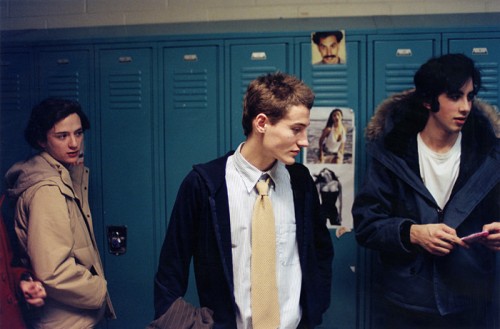
Collin Lafleche, At School, 2007, (from the series, “Right After”), photograph
A few additional thoughts from commenters on the never-ending discussion on The New Museum’s decision to exhibit the collection of Trustee Dakis Joannou. Many, including myself, think the show represents a conflict of interest.
There are two things I don't like about this show. First, I'm not sure Joannou is a very interesting collector. Let's turn the New Museum over to Andy Stillpass instead. Second of all, it takes away from the incentive for someone like Joannou to build his own museums. If he wants a public presence in New York, he should build a permanent space and make his collection more public instead of taking up an existing one.
Conflict of interest considerations are important, but it's also true that collecting and collectors (and dealers) are underrepresented in the academic sides of contemporary art. I like the idea of institutions showing private collections, but only if they are interesting as collections rather than just impressively valuable. Collecting is a lot like curating. I think the reason this situation is so frustrating is that the museum isn't getting much in the way of interest in return for leveraging its credibility for Mr. Joannou's net worth, in other words that he isn't a very good curator.
If we could use the financial incentives at stake here to compel collectors to make better choices, rather than just be extravagant and buy what's already canonized, that would be helpful, I think.
I just want to reiterate the point I made in a previous post; why would anyone defend curating a show exclusively based on Jannou's collection? It is totally unnecessary. It's not like his collection is made of unique old master paintings for which there is no substitute; it is made up of editions and work by younger contemporary artists that is not particularly recognized as being the pinnacle example of the artists work. The New Museum can get the same or substantially comparable material elsewhere. Why defend getting it from Jannou when the only good that does is to promote Jannou or at the very least raise the specter of conflicts?I know a lot of the people at the NewMu, trustees and staff, I think they just did not consider the implications here and accidentally got into a pickle. Unfortunately now they also can't back down and lose face even though they should. But this is why Green is right; this should be an issue addressed by accrediting associations so that it can be avoided in the future. With many trustees now over invested in contemporary art and low on liquidity I suspect we'll be seeing a lot more problems like this for years to come as they try to figure out how to leverage their art assets. Jannou is a businessman, he knows what he is doing.
– Andrew
…I think the conversation has become vindictive and aggressive and a 'witch-hunt' because this sort of show, the Joannou one, is indicative of the fact that there really is so little New work being shown right now, and when even a place called the New Museum can't go against that, where else do we have to turn for good, new work? People have seized on this just because it's happening right now, not because it's particularly inflammatory.I don't doubt that the Joannou show will have interesting work, will be decently-curated, and will be relatively enjoyable to see. But when you're working on the scale of billions of dollars, that isn't particularly difficult. The fact is that the New Museum isn't trying hard enough.
On a related subject, I would like to reiterate a position I hold in opposition to that of Jerry Saltz: I don’t like that the art world is unregulated. Unregulated markets create environments where forces of good have to capitulate to a system that isn’t always operating in the best interests of art. I realize this may seem glassy eyed, but regulation doesn’t have to represent irreparable damage.
In other related news, Two Coats of Paint reports that a series of comments published on Jerry Saltz’s facebook page attacking blogger Tyler Green for his “idealistic dream of a conflict-free art world” were deleted. I’m not sure how this happened, but it presents yet another case for moving these comments to a blog. Facebook simply isn’t designed to be used as a publishing platform.
One final note on the bickering that’s irrupted as of late: While I have at times found blogger Tyler Green’s tone needlessly aggressive, the response has been much more troubling. As a result I’m going to let this story simmer down and will slow our coverage for the next couple of days.


{ 26 comments }
FYI, Jerry Saltz deleted those posts himself. It wasn’t a FB glitch. I’m kind of glad this happened – the tone was not pleasant, and it was looking like it would escalate out of hand.
FYI, Jerry Saltz deleted those posts himself. It wasn’t a FB glitch. I’m kind of glad this happened – the tone was not pleasant, and it was looking like it would escalate out of hand.
I wasn’t sure. But again this is why moderated comments make sense.
I wasn’t sure. But again this is why moderated comments make sense.
I agree with you about Green and the response.
And I agree with Andrew, what makes the Jannou collection so special — does he have some secret somethings that we haven’t already seen?
I agree with you about Green and the response.
And I agree with Andrew, what makes the Jannou collection so special — does he have some secret somethings that we haven’t already seen?
I want to contest C. Lafleche’s statement that “there really is so little New work being shown right now” because there are small nonprofits (such as my workplace Art in General) that make a real effort to show new and challenging work. It’s true that high-profile museums don’t show new work often but there are lots of other places to turn for “good, new work.” In addition to Art in General there are, among others, Artists Space, Creative Time, SculptureCenter, and any number of fun little renegade shows that pop up in unexpected and sometimes unusual places.
I want to contest C. Lafleche’s statement that “there really is so little New work being shown right now” because there are small nonprofits (such as my workplace Art in General) that make a real effort to show new and challenging work. It’s true that high-profile museums don’t show new work often but there are lots of other places to turn for “good, new work.” In addition to Art in General there are, among others, Artists Space, Creative Time, SculptureCenter, and any number of fun little renegade shows that pop up in unexpected and sometimes unusual places.
I too do not like commentz that are unregulated.
P.S. Boston’s Museum of Fine Arts flaunted a donor William I. Koch’s collection in a 2005 exhibit titled -I kid you not- “Things I Love†in which among other things, two America’s Cup sailing yachts sat on the MFA lawn for the duration of the show. Koch is listed that year as having donated $1 million to $2.5 million toward a major museum expansion project which is near its completion.
http://www.mfa.org/exhibitions/sub.asp?key=15&subkey=519
Most of the local press at the time adopted the Boston Brahmin approach to the idea of conflict of interest. That is to say if the masses get to glimpse at the lives of the gods for the price of their admission, what’s the harm?
I too do not like commentz that are unregulated.
P.S. Boston’s Museum of Fine Arts flaunted a donor William I. Koch’s collection in a 2005 exhibit titled -I kid you not- “Things I Love†in which among other things, two America’s Cup sailing yachts sat on the MFA lawn for the duration of the show. Koch is listed that year as having donated $1 million to $2.5 million toward a major museum expansion project which is near its completion.
http://www.mfa.org/exhibitions/sub.asp?key=15&subkey=519
Most of the local press at the time adopted the Boston Brahmin approach to the idea of conflict of interest. That is to say if the masses get to glimpse at the lives of the gods for the price of their admission, what’s the harm?
It would be an excellent project to come up with a proposal for a contemporary art regulatory scheme.
It would be an excellent project to come up with a proposal for a contemporary art regulatory scheme.
What does regulation mean? Who would be regulated and what would be outlawed, what disclosures would be required? What are the expected collateral consequences, and then what are the unforeseen impacts?
Are we talking about disclosing who owns what and how much they paid, and who gets what cut? And registering dealers and advisors? Is it Charlie Finch’s suggestion of requiring auction houses to disclose the identities of all buyers and sellers?
Or is it purely/largely about institutions, museums, and creating…what, more transparency/disclosure laws? Restricting them by some law as to what they can do or show or support?
Are art fairs the new gun shows, thriving in some loophole? What about biennials? And private foundations and museums? I mean, I just can’t see where you’d start and stop, or to what end.
What does regulation mean? Who would be regulated and what would be outlawed, what disclosures would be required? What are the expected collateral consequences, and then what are the unforeseen impacts?
Are we talking about disclosing who owns what and how much they paid, and who gets what cut? And registering dealers and advisors? Is it Charlie Finch’s suggestion of requiring auction houses to disclose the identities of all buyers and sellers?
Or is it purely/largely about institutions, museums, and creating…what, more transparency/disclosure laws? Restricting them by some law as to what they can do or show or support?
Are art fairs the new gun shows, thriving in some loophole? What about biennials? And private foundations and museums? I mean, I just can’t see where you’d start and stop, or to what end.
A number of commentors brought this up on facebook too. It’s a can of worms I rather wish I hadn’t opened since the comment is vague enough that you’re absolutely right: there’s no beginning or end.
In this particular case, I had assumed he was talking about how the American Association of Museums does not specifically mandate that trustees don’t also show their collections in those museums, though there are a number of cautionary flags. If this practice weren’t approved I think that would be a good thing.
I know this isn’t a particularly popular opinion, but I find equating “ban” with a loss of democracy to be a little reactionary. We ban people and companies from doing all sorts of things with think aren’t good for the whole, and there aren’t too many people claiming that these pre-existing rules jeopardize the future of democracy.
Anyway, I spoke about unregulated markets, which is also related. I’m inclined to drop that aspect of it though, since it’s clearly peripheral to the crux of this story.
A number of commentors brought this up on facebook too. It’s a can of worms I rather wish I hadn’t opened since the comment is vague enough that you’re absolutely right: there’s no beginning or end.
In this particular case, I had assumed he was talking about how the American Association of Museums does not specifically mandate that trustees don’t also show their collections in those museums, though there are a number of cautionary flags. If this practice weren’t approved I think that would be a good thing.
I know this isn’t a particularly popular opinion, but I find equating “ban” with a loss of democracy to be a little reactionary. We ban people and companies from doing all sorts of things with think aren’t good for the whole, and there aren’t too many people claiming that these pre-existing rules jeopardize the future of democracy.
Anyway, I spoke about unregulated markets, which is also related. I’m inclined to drop that aspect of it though, since it’s clearly peripheral to the crux of this story.
re: Claire from Art in General
Perhaps my tone was a little too black and white. I don’t disagree that there are, indeed, numerous places throughout NYC to go see young work, along with numerous organizations that sponsor young artists. I even think there are still some pretty big names among the established galleries that put on really interesting (and more importantly fun) shows/events (Deitch and the Art Parade–co-sponsored by CreativeTime, no less–come to mind immediately).
Nonetheless, they are the very few and usually poor among the very rich and very many. That’s really my point, I guess: that the distribution is so skewed. Not that there is simply zero young work, but that there should be a whole lot more (even though so much of it, when shown, is not very good–but that’s a whole other conversation).
I’m not saying things should be snap-your-fingers easy for young artists or young spaces. In fact, the challenge of it all is almost undoubtedly a good thing. But as much as we all like the underdog, I still think there is a significant trickle-down effect that radiates out through the entire art world and to which we are all susceptible, directly or not. For example: there are thousands upon thousands of young photographers nowadays out there trying to make their way by getting published in zines, in Vice, on tinyvices, through small publishing houses, etc. etc. I think that would be great, if most of the work wasn’t so…blah. And a lot of people will say ‘well, they’re enjoying it, the work is not the best but it’s good enough, so let them be.’ But if you look at a lot of the work, aesthetically and emotionally the large majority of it can be traced back to Ryan McGinley, for one, and where does that come from? His exposure at the Whitney at 23! So as a young artist, how can you not feel that pressure? Anyone who says they aren’t concerned with getting into big museums is lying. Yea, maybe they’re not as concerned as some of their peers, but they definitely think about it all the time. I know I do. And it pushes me to work harder.
Which is why I think it’s so important for the people at the top to take an active role in setting the sort of realistic standards that the rest of the art world lives by, or looks at, or whatever. They don’t need to be the only voices, but they do have a responsibility to carry a torch. This whole controversy is a perfect example of that. I/we expected better.
It’s not hard to get some friends together and put on a weekend show in an apartment in Williamsburg. It’s markedly harder to get into the New Museum. While I didn’t really like the show, Younger Than Jesus sort of restored a bit of my faith in a big institution being able to do something a little risky. But when they then go ahead and return to the old million-dollar model, it’s sort of like, well, so much for that mirage.
Even Jeffrey Deitch, who puts on so many fun and at times really amazing shows, can’t get around it. How does he fund all that risky work? By buying and selling Picassos.
re: Claire from Art in General
Perhaps my tone was a little too black and white. I don’t disagree that there are, indeed, numerous places throughout NYC to go see young work, along with numerous organizations that sponsor young artists. I even think there are still some pretty big names among the established galleries that put on really interesting (and more importantly fun) shows/events (Deitch and the Art Parade–co-sponsored by CreativeTime, no less–come to mind immediately).
Nonetheless, they are the very few and usually poor among the very rich and very many. That’s really my point, I guess: that the distribution is so skewed. Not that there is simply zero young work, but that there should be a whole lot more (even though so much of it, when shown, is not very good–but that’s a whole other conversation).
I’m not saying things should be snap-your-fingers easy for young artists or young spaces. In fact, the challenge of it all is almost undoubtedly a good thing. But as much as we all like the underdog, I still think there is a significant trickle-down effect that radiates out through the entire art world and to which we are all susceptible, directly or not. For example: there are thousands upon thousands of young photographers nowadays out there trying to make their way by getting published in zines, in Vice, on tinyvices, through small publishing houses, etc. etc. I think that would be great, if most of the work wasn’t so…blah. And a lot of people will say ‘well, they’re enjoying it, the work is not the best but it’s good enough, so let them be.’ But if you look at a lot of the work, aesthetically and emotionally the large majority of it can be traced back to Ryan McGinley, for one, and where does that come from? His exposure at the Whitney at 23! So as a young artist, how can you not feel that pressure? Anyone who says they aren’t concerned with getting into big museums is lying. Yea, maybe they’re not as concerned as some of their peers, but they definitely think about it all the time. I know I do. And it pushes me to work harder.
Which is why I think it’s so important for the people at the top to take an active role in setting the sort of realistic standards that the rest of the art world lives by, or looks at, or whatever. They don’t need to be the only voices, but they do have a responsibility to carry a torch. This whole controversy is a perfect example of that. I/we expected better.
It’s not hard to get some friends together and put on a weekend show in an apartment in Williamsburg. It’s markedly harder to get into the New Museum. While I didn’t really like the show, Younger Than Jesus sort of restored a bit of my faith in a big institution being able to do something a little risky. But when they then go ahead and return to the old million-dollar model, it’s sort of like, well, so much for that mirage.
Even Jeffrey Deitch, who puts on so many fun and at times really amazing shows, can’t get around it. How does he fund all that risky work? By buying and selling Picassos.
Deitch also funded the Urs Fischer show.
It’s telling that in this whole Dakis debate, the New Museum gets no credit for the sprawling survey shows like Younger Than Jesus or Unmonumental, nor for showing artists other museums in NYC don’t, like Abts, Heilman, even William Christenberry, who was in Gioni’s landscape ruins show last summer.
To the extent that criticism and calls for change are about ethical or commercial issues, then actions by professional associations and maybe even governmental institutions could be useful.
But if the problem is the New Museum isn’t showing work you like, or the work you’d show–or your work–the criticism amounts to little more than armchair curating.
In which case, just let the museum do its job, then judge the result. And if there are glaring errors and omissions, then pull a Marcia Tucker and do something about it.
Deitch also funded the Urs Fischer show.
It’s telling that in this whole Dakis debate, the New Museum gets no credit for the sprawling survey shows like Younger Than Jesus or Unmonumental, nor for showing artists other museums in NYC don’t, like Abts, Heilman, even William Christenberry, who was in Gioni’s landscape ruins show last summer.
To the extent that criticism and calls for change are about ethical or commercial issues, then actions by professional associations and maybe even governmental institutions could be useful.
But if the problem is the New Museum isn’t showing work you like, or the work you’d show–or your work–the criticism amounts to little more than armchair curating.
In which case, just let the museum do its job, then judge the result. And if there are glaring errors and omissions, then pull a Marcia Tucker and do something about it.
Good point re: places to show new work. Creative Time does not support untested work, artists space now is doing historical shows, sculpture center’s open call is not really open.
The main question is, is New York a place for young artists to develop?
My answer is probably NOT, from experience. New York is a great place to be if you have a couple of semi-powerful curators who support you, otherwise, get the support elsewhere and come here for shows only. New Museum mostly shows circuit-approved artists.
Not to sound conservative, but some high-profile non-profits (White Columns and Artists Space) are now run by Europeans who have tended to bring more and more European work in detriment to the support of a local core of artists.
In light of these issues, the Joannou fracas seems more pointed. New York is a bigger city than what it appears to be from the curatorial choices of the New Museum. Will Jerry or someone address that?
Good point re: places to show new work. Creative Time does not support untested work, artists space now is doing historical shows, sculpture center’s open call is not really open.
The main question is, is New York a place for young artists to develop?
My answer is probably NOT, from experience. New York is a great place to be if you have a couple of semi-powerful curators who support you, otherwise, get the support elsewhere and come here for shows only. New Museum mostly shows circuit-approved artists.
Not to sound conservative, but some high-profile non-profits (White Columns and Artists Space) are now run by Europeans who have tended to bring more and more European work in detriment to the support of a local core of artists.
In light of these issues, the Joannou fracas seems more pointed. New York is a bigger city than what it appears to be from the curatorial choices of the New Museum. Will Jerry or someone address that?
I don’t really have a problem with the New Museum programming in general. It’s not uber emerging typically, but I don’t think the Museum has to look exactly how Tucker left it. I cover a large number shows they launch because I find them interesting.
I’ve never been given any reason to think the museum isn’t a force for good, but I do think that anyone’s good intentions can be compromised when they’re put in situations where conflicts of interests exist. I just don’t see the reason for institutions and individuals to subject themselves to those risks to begin with.
I don’t really have a problem with the New Museum programming in general. It’s not uber emerging typically, but I don’t think the Museum has to look exactly how Tucker left it. I cover a large number shows they launch because I find them interesting.
I’ve never been given any reason to think the museum isn’t a force for good, but I do think that anyone’s good intentions can be compromised when they’re put in situations where conflicts of interests exist. I just don’t see the reason for institutions and individuals to subject themselves to those risks to begin with.
agreed x2.
I can’t help wondering how much of the heat over this Dakis thing is due to pre-existing conditions–i.e., economic, art/work, cultural, political anxieties–that are already out there. Then the NuMu saunters along with its Wall St. Bailout of a show, and gets pummeled.
agreed x2.
I can’t help wondering how much of the heat over this Dakis thing is due to pre-existing conditions–i.e., economic, art/work, cultural, political anxieties–that are already out there. Then the NuMu saunters along with its Wall St. Bailout of a show, and gets pummeled.
Comments on this entry are closed.