
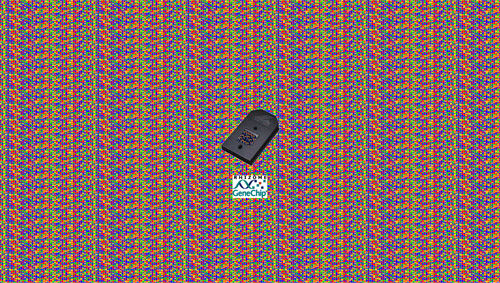
Eugene Thacker, splash art, 1998
Nobody needs a cover page on the Internet, but that didn’t stop countless slow-loading flash programs from taking off in the late 1990’s. Nor did it thwart Rhizome from commissioning artists to make splash pages for their site at the turn of the millennium. It was part of web culture at the time– a subject worthy of reflection and the driving force behind Splashback, an online exhibition organized by Rhizome’s curatorial fellow Brian Droitcour.
Overall, though, I’m confused about what I’m looking at, and why. Basic design and organizational issues plague the exhibition. A viewer doesn’t know if this is a selection of Rhizome’s commissioned splash pages or all of them (either way there are too many). UPDATE: Splashback presents all the commissioned pages, which is noted in the exhibition description, but not the curatorial statement. No thumbnails are used for the individual artist pages, so users have to click through links blindly. Probably the most obvious problematic decision is listing the artist names alphabetically– an immediately suspect method of organization in any gallery exhibition. The choice suggests randomness in the curatorial process that I’m certain doesn’t exist. Personally, I’d be interested in seeing how the pages changed from year to year, what sets them apart in their programming approach and how the diverse professional backgrounds and age of those commissioned effected the look of the work. None of this is made transparent.
As for the commissions themselves, the quality varies greatly. Were the presentation different, I’m not convinced this would be a problem (as an anthropological look at the page, quality isn’t necessarily a valuable sorting method). But as is, it’s hard to go through more than thirty-five artists and not desire some means of evaluating the work.
That said, the works in the show I particularly enjoyed were Seoul-based Young-Hae Chang Heavy Industries, Bust Down the Door, a text-based narrative from which the only escape comes in the form of a link to Rhizome’s main page, and cultural theorist Eugene Thacker’s DNA microarray gif and Affymetrix logo redesign critiquing its claim to ownership of human genome information. Although the exhibition does not make this clear in each case, I also liked that not all of the projects still work properly. MTAA’s On Kawara Update, 2001-2002, for example, a project that once consisted of a white on black text indicating the date and culled news stories from the day, now consists only of the last page of a broken work. The piece stopped working in December 2002 when Rhizome reconfigured their servers. In 2007 they relaunched a second version, which can be seen here.
Although MTAA may not have anticipated their piece breaking quite so quickly, there’s a sad poignancy to the inevitable finite existence of most web ephemera, particularly relative to On Kawara Update, an artist who’s date paintings are essentially an abstract archive of experience. A server moves, page links disappear, a browser update no longer supports a program used to run a piece. The great myth of the internet is that it’s any kind of reliable archive. Should the brilliantly conceived exhibition Splashback have made some of these ideas a little more accessible, it would have been a complete success.


{ 6 comments }
Hi Paddy,
Thanks for the thoughtful response. I just wanted to clarify a few things.
I can’t take credit for conceiving the exhibition. The idea had been in the air at Rhizome a few months before I started working there. I just did the research I thought that needed to be done to present the splash pages effectively.
These are all the splash pages that were commissioned, not a selection. The announcement we posted to the blog and the project description on Rhizome’s Exhibitions page both make that clear. However, I did leave that out of the statement, and will consider fixing that.
Thirty-nine is a lot of pages. I realize that the average viewer is not likely to look at every project. But “Splashback†was planned as an archive, so it was important to include everything. Any selection would have had to include members of “net.art establishment†(Olia Lialina, JODI, Heath Bunting, etc.) because their work continues to be of interest to the community, and that would have happened at the expense of ones who have already fallen through the cracks. One of the goals of “Splashback†was to bring attention to works and artists who have been forgotten.
You raised the issue of quality, and I think judgments about quality change over time. I think “Splashback†demonstrates the gap between how people understood internet art then vs. now. For instance, it’s rare to come across abstraction these days, but there are a couple of abstract pieces in “Splashback†by Robbin Murphy and Matt Hoessli that I really like, even though they look pretty simple by today’s standards.
Categorizing the pages is something I considered when I started working on “Splashback.†But after talking to Mark Tribe and Alex Galloway, I decided that such an approach would misrepresent the spontaneous nature of the commissioning process. Besides, the classification of internet art remains an unsolved problem, and it wasn’t my objective to provide a solution for it here. The neutral, alphabetical approach was the fairest one, and it also reflects the purpose of “Splashback†as a directory of works that would have otherwise been lost in the back end of Rhizome’s server.
Ultimately, “Splashback” is more of a preservation effort than a curatorial project. Many of the pages were broken when we started working on this seriously three months ago. Nick Hasty, our director of technology, worked with several artists to update code so the splash art would function on today’s browsers. We didn’t realize that anything was wrong with MTAA’s page (I think it looks good the way it is now!), but now that you’ve pointed that out I hope we can take steps to fix it.
Again, thanks for your thoughts and giving me a chance to expand on some of the issues this exhibition raises.
Hi Paddy,
Thanks for the thoughtful response. I just wanted to clarify a few things.
I can’t take credit for conceiving the exhibition. The idea had been in the air at Rhizome a few months before I started working there. I just did the research I thought that needed to be done to present the splash pages effectively.
These are all the splash pages that were commissioned, not a selection. The announcement we posted to the blog and the project description on Rhizome’s Exhibitions page both make that clear. However, I did leave that out of the statement, and will consider fixing that.
Thirty-nine is a lot of pages. I realize that the average viewer is not likely to look at every project. But “Splashback†was planned as an archive, so it was important to include everything. Any selection would have had to include members of “net.art establishment†(Olia Lialina, JODI, Heath Bunting, etc.) because their work continues to be of interest to the community, and that would have happened at the expense of ones who have already fallen through the cracks. One of the goals of “Splashback†was to bring attention to works and artists who have been forgotten.
You raised the issue of quality, and I think judgments about quality change over time. I think “Splashback†demonstrates the gap between how people understood internet art then vs. now. For instance, it’s rare to come across abstraction these days, but there are a couple of abstract pieces in “Splashback†by Robbin Murphy and Matt Hoessli that I really like, even though they look pretty simple by today’s standards.
Categorizing the pages is something I considered when I started working on “Splashback.†But after talking to Mark Tribe and Alex Galloway, I decided that such an approach would misrepresent the spontaneous nature of the commissioning process. Besides, the classification of internet art remains an unsolved problem, and it wasn’t my objective to provide a solution for it here. The neutral, alphabetical approach was the fairest one, and it also reflects the purpose of “Splashback†as a directory of works that would have otherwise been lost in the back end of Rhizome’s server.
Ultimately, “Splashback” is more of a preservation effort than a curatorial project. Many of the pages were broken when we started working on this seriously three months ago. Nick Hasty, our director of technology, worked with several artists to update code so the splash art would function on today’s browsers. We didn’t realize that anything was wrong with MTAA’s page (I think it looks good the way it is now!), but now that you’ve pointed that out I hope we can take steps to fix it.
Again, thanks for your thoughts and giving me a chance to expand on some of the issues this exhibition raises.
Hey Brian,
I feel like tags might have helped with categorizing without making it seem too category-ish if that makes sense. A lot of the time tags are applied in the same stream of consciousness way that these projects were conceived.
Anyway, thanks for your feedback. It’s good to have this additional background.
P.S. I updated the post to indicate that the exhibition description explains that this was not a selection, but all of the commissions.
Hey Brian,
I feel like tags might have helped with categorizing without making it seem too category-ish if that makes sense. A lot of the time tags are applied in the same stream of consciousness way that these projects were conceived.
Anyway, thanks for your feedback. It’s good to have this additional background.
P.S. I updated the post to indicate that the exhibition description explains that this was not a selection, but all of the commissions.
Hey Paddy, thanks for the review and thanks Brian for doing the show.
It’s has been fine for us that the work has stopped. It was an important moment the way we look at net art. We built a system and set it out onto the net and watch it stop. As Paddy points out in the review, it underscored that although the internet seemed to be an eternal space, it like any location, has entropy. We like to think of the work as a monument to that reality. We’re happy with the fail, as long as viewers can understand the context around the work.
We talked a good bit about rebuilding the work and in the end thought that the only honest thing to do was to make an updated version.
In the first splash version, you can click a small link at the top of the page. It has a pop-up with a somewhat performed and fictionalized text about the work. In this text (I think I wrote both Tim and my parts with Alex writing the script section) the character m.river says
“Time is moving forward and we have lost our way. So much to say and so much to do. Make art. Look at the world. Live. We wish it could go on forever, even when we aren’t there. This is not about history and looking back but the need to project ourselves forward beyond this moment. It is not to live forever but rather to imagine the future beyond ourselves.â€
The text, in light of the way the art worked out, still seems right
Hey Paddy, thanks for the review and thanks Brian for doing the show.
It’s has been fine for us that the work has stopped. It was an important moment the way we look at net art. We built a system and set it out onto the net and watch it stop. As Paddy points out in the review, it underscored that although the internet seemed to be an eternal space, it like any location, has entropy. We like to think of the work as a monument to that reality. We’re happy with the fail, as long as viewers can understand the context around the work.
We talked a good bit about rebuilding the work and in the end thought that the only honest thing to do was to make an updated version.
In the first splash version, you can click a small link at the top of the page. It has a pop-up with a somewhat performed and fictionalized text about the work. In this text (I think I wrote both Tim and my parts with Alex writing the script section) the character m.river says
“Time is moving forward and we have lost our way. So much to say and so much to do. Make art. Look at the world. Live. We wish it could go on forever, even when we aren’t there. This is not about history and looking back but the need to project ourselves forward beyond this moment. It is not to live forever but rather to imagine the future beyond ourselves.â€
The text, in light of the way the art worked out, still seems right
Comments on this entry are closed.
{ 1 trackback }